Heart & Mind Conversations®
Building Enough Rivaltrust™ to Contest Deep Differences in Good Faith
Book a Heart & Mind Conversation®
Contact FRD to set up your Heart & Mind Conversation®
Want to run a conversation like this in your community, congregation, classroom, or living room? Here’s how it works.
How Heart & Mind Conversations® Work
Heart & Mind Conversations™ are designed to build trust across deep and lasting differences—without requiring agreement or common ground.
1. Set the Intention
This is not a casual discussion. Participants commit to The Way of Mutual Openness©, creating the conditions for honest and challenging conversation.
2. Break Bread
Whenever possible, conversations begin with a shared meal. Eating together signals welcome and goodwill before difficult differences are explored.
3. Share Formation Stories
Participants begin by telling the personal story of how they came to their deepest beliefs, values, and commitments. At this stage, there is no debate—only listening.
4. Enter Strategic Conversation
Participants then engage a carefully sequenced set of questions designed to surface what they care about most, where genuine differences exist, how harm is experienced, and what it means to remain in relationship under moral tension.
Depending on the group, these conversations may be more participant-guided, with light structure and shared responsibility, or more facilitated, with intentional guidance to support trust-building when stakes are high or trust is fragile.
5. Practice Trust Under Tension
Heart & Mind Conversations® do not aim for agreement or consensus. They help participants practice co-resistance—remaining in honest, accountable relationship while openly contesting incompatible convictions.
Facilitation
Facilitators are not always necessary, but they are strongly recommended when differences are sharp, emotions run high, or deeper issues may otherwise remain unspoken.
Our Core Ethic: Three Practices That Guide Everything
We call this our Existential Trust Ethic - a way of showing up honestly, respectfully, and persuasively in conversations that matter.
Comtestation: Courageous, respectful challenge
We don’t avoid disagreement - we lean into it with honesty and care..
Comsuasion: Mutual influence without manipulation
We seek to persuade and be persuaded - freely, not forcefully.
Comversion: Opennes to change - without needing consensus
We don’t aim to “win.” We aim to grow, even if we still disagree at the end.
For an example of conversations leading to rivaltrust, watch the Public Enemies, Private Friends for the story or a murderous shooting spree, a trial, and secret conversations between pro-choice and pro-life leaders that became the impossible story of friendship across irreconcilable differences. A documentary film by Sarah Perkins and Joshua Sabey. Read the participants’ jointly authored op-ed from The Boston Globe here. Another example comes by way of an Israeli and Palestinian in an intimate TED Talk about Gaza.
We provide a unique service called Heart & Mind Conversations™, grounded in The Way of Mutual Openness©—a simple but powerful way to engage across deep differences.
At the heart of everything we do is one goal: Build real trust between people who disagree - without asking them to give up their convictions.
-
Kindness goes further toward building trust than the other practices listed here. It is not weak, or naive, or mere politeness. Kindness is an emotional language easily recognized and understood by everyone.
-
When you are deeply honest, you acknowledge your motives for doing things, and express your thoughts and feelings without faking it. Your honesty prompts others to respond the same way, and with open hearts and minds real communication results.
-
We often presume that our adversarial critics are stupid, duped or have evil intentions. Sometimes this may be true. But we sabotage any true communication when we presume this is so in advance. Presuming good will is not agreeing with another’s beliefs or values. It grants that others are clear thinking, wise and good-hearted unless proven otherwise.
-
It is hard to listen well when you focus more on your feelings and thoughts than those of the person addressing you. Listening well is not remaining quiet before you insert your response; it is a laser-focused desire to really understand the unique person addressing you.
-
If you want to be taken seriously you must take others seriously. Sharing the floor means allowing others equal time to speak even when you feel certain you are right and they are wrong. It acknowledges the mutual dignity of those engaged in conversation.
-
Each human is uniquely different with a unique history and perspective. Acknowledging our important differences openly frees us to know where we stand without having to guess, and creates a tone of trust for real conversation.
-
With genuine differences come tough questions if the goal is a trusting relationship. When you answer tough questions in a straightforward way, it leads to mutual trust. However, we should acknowledge that strong emotions often arise when we face difficult questions that can feel offensive. Sharing emotions as well as ideas is essential to trust-building. Thus, we agree to express our emotions without blaming each other, and to face offensive issues without taking offense.
-
Any compliment feels good, but a sincere compliment from an unexpected source such as a rival or critic can move our hearts powerfully toward trust. By openly admiring the excellence or good on ‘the other side’ you demonstrate your honesty and fairness, and your confidence that your side can handle the truth.
-
Each of us is unique and we don’t like others—especially outsiders—to stereotype us or claim they know what we really believe or value. So ask, don’t tell others what they think and feel. Also, except when you have been authorized to speak on behalf of others, speak only for yourself and encourage others to do likewise.
-
Personal dignity is based in large part on your freedom to choose when and where to share your inner self with others. Being open, honest and trustworthy does not require you to disclose all things to all people. Keeping private things private means you strictly honor someone’s choice to say something to you alone.
The Way of Mutual Openness©
These aren’t just rules - they’re habits and rituals of trust.

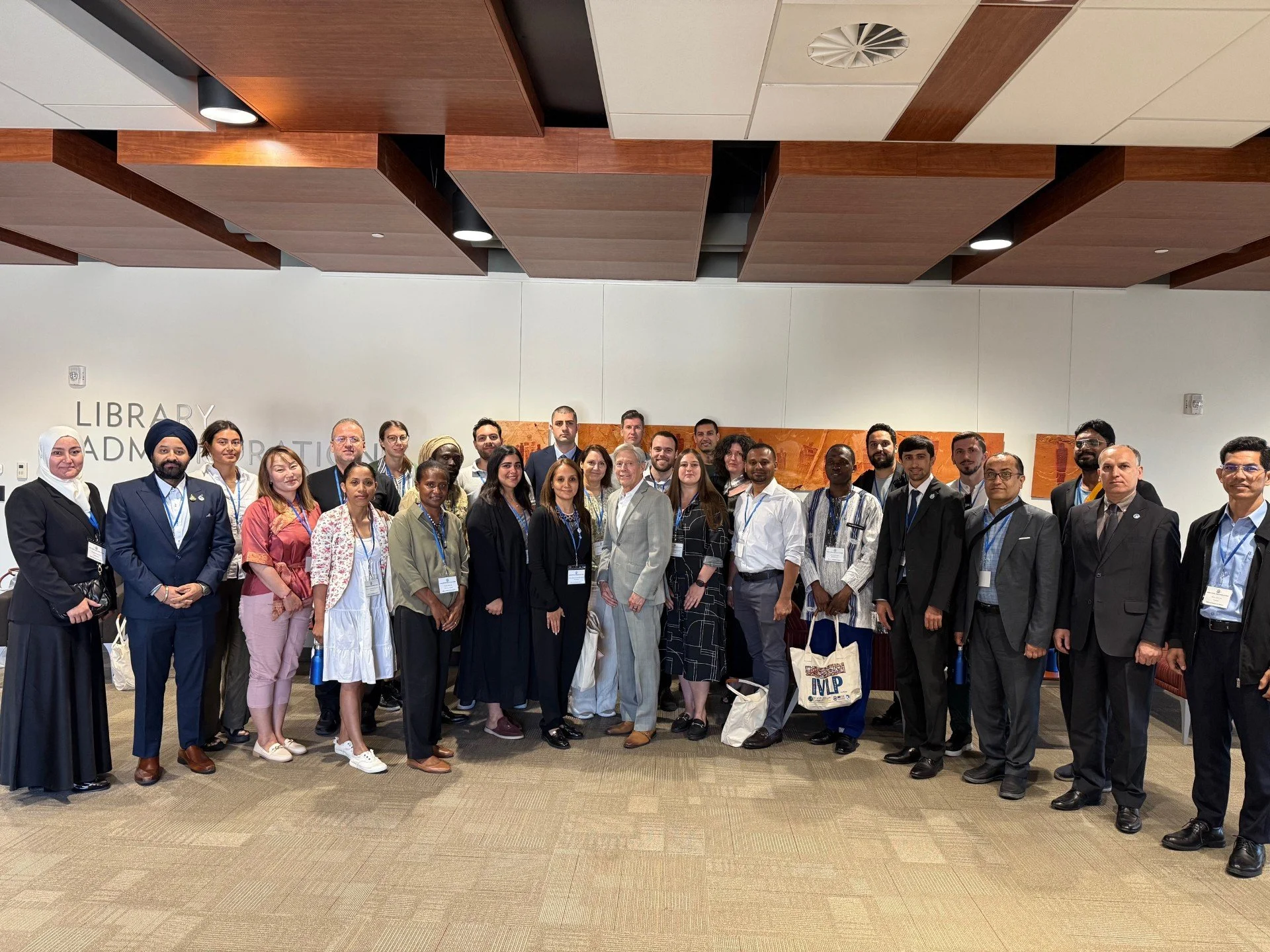
Heart & Mind Conversation in Qum, Iran – 2024